
Lazio off the beaten path: small villages beyond Rome
The Lazio past Rome: medieval villages, thermal springs, Etruscan ruins and local food traditions. Travel guide 2026.
The Lazio that tourists don't know
Rome gets 16 million visitors per year. The region around it, Lazio, gets a fraction of that. The medieval villages, Etruscan ruins, volcanic lakes and thermal springs that surround Rome remain largely unknown to international tourists.
This guide is about the Lazio past the Colosseum.
Why Lazio?
Lazio has:
- 378 towns and villages, each with its own page on Fuoriporta
- Thermal springs at Viterbo (the Bullicame, which Dante mentions)
- UNESCO Etruscan necropolis at Cerveteri and Tarquinia
- Italy's largest volcanic lake (Lake Bolsena)
- Marcetelli, with 53 inhabitants, the smallest municipality in Lazio
I dieci posti meno battuti vicino a Roma
1. Marcetelli: the smallest municipality in Lazio
53 inhabitants | 89 km from Rome, 1h 29min
By population it is the smallest municipality in Lazio. It sits at 930 metres and looks down on the valley of the Salto and its lake, an artificial reservoir made by damming the river. In the village is the Bottega del Cerchiaro, a museum of the coopers who made barrels and vats from chestnut wood: visits by appointment (on the official website on 6 October 2026).
2. Civita di Bagnoregio: the dying city
134 km from Rome, 1h 43min (to Bagnoregio)
Perched on an eroding tufa promontory, reachable only by a pedestrian bridge. One of the most photographed villages in Italy. Arrive before 9:30am to avoid the crowds.
3. Calcata: the artists’ village
902 inhabitants | 53 km from Rome, 1h 5min
The old village stands on a tufa spur above the Treja valley. A royal decree of 1935 listed it among the towns to be abandoned because of the risk of landslides, but not everyone left and the village was saved. Artisans and artists moved into its houses, among them the architect Paolo Portoghesi, who lived in Calcata until his death in 2023. Artisan workshops, aperitivo with views over the Valle del Treja.
4. Labro: the restored medieval village
346 inhabitants | 103 km from Rome, 1h 42min
After the post-war depopulation, its houses and palaces were restored to a design by the architect Ivan Van Mossevelde. It looks out over Lake Piediluco. Now it's a perfect example of medieval architecture with real residents.
5. Blera: the road cut into the rock
24 km from Viterbo
The ancient via Clodia cuts through the tufa rock here, past two Roman bridges, the Ponte del Diavolo and the Ponte della Rocca. Etruscan tombs surround the village, and nearby, at San Giovenale, the Swedish Institute of Classical Studies excavated an Etruscan settlement between 1956 and 1965, with the king of Sweden, Gustav VI Adolf, among those taking part.
6. Sutri: the amphitheater in rock
55 km from Rome, 1h 1min
A Roman amphitheatre carved entirely out of the tufa, in the Parco dell’antichissima città di Sutri, below the town. Nearby are a necropolis with dozens of tombs cut into the same rock and a mithraeum, a shrine of the god Mithras, which later became the church of the Madonna del Parto.
7. Vallepietra: the cliff sanctuary
228 inhabitants | 96 km from Rome, 1h 40min
A sanctuary beneath a sheer cliff of Monte Autore, at over 1,200 metres. Romans have been making pilgrimages here since the Middle Ages.
8. Norchia: the abandoned medieval city
28 km from Viterbo | 30 min hike
Abandoned for centuries. Never rebuilt. Etruscan necropolis, ruined medieval churches, absolute silence.
9. Bullicame: Dante’s hot spring
3 km from the centre of Viterbo
Just outside Viterbo, the Bullicame is a sulphurous spring whose water comes out at about 58 °C; Dante mentions it in canto XIV of the Inferno. The town council runs a public thermal park there, the parco del Bullicame.
10. Lake Turano
82 km from Rome to Castel di Tora, 1h 10min
The most romantic lake in Lazio. Mountains, medieval villages, kayaking. Almost no tourists outside August.
Practical information
Getting there: All destinations are reachable by car. Public transport is very limited.
Best time to visit: April-May and September-October. August is peak season.
Language: English is not widely spoken in small villages. Learn basic Italian phrases.
Payment: Many village restaurants accept cash only.
The day, already planned
Every town in this guide has its own page on Fuoriporta, in Italian, with the day hour by hour. When a COTRAL bus goes there, the page shows the nearest stop and the timetable. If you can’t choose: tell Fuoriporta where you’re starting from, and it picks the destination and plans the day.
I paesi di questo articolo
Sulla mappa con il numero della loro scheda: tocca un numero per aprire la pagina del paese.
 Foto di Marica Massaro · CC BY-SA 4.01Cosa vedere a Marcetelli
In provincia di Rieti · Lo conoscono in tanti
A tavola: Bar Cannone valutazione 4,3 su 5
 Foto di New2022 · CC BY-SA 4.02Cosa vedere a Bagnoregio
In provincia di Viterbo · Lo conoscono in tanti
A tavola: Janky bistrot valutazione 4,9 su 5
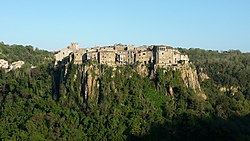 Foto di OrCer · CC BY-SA 4.03Cosa vedere a Calcata
In provincia di Viterbo · Fuori dai giri soliti
A tavola: Bar Da Giusy Di Mureddu Giuseppina valutazione 4,7 su 5
 Foto di Antichitera · CC BY-SA 3.04Cosa vedere a Labro
In provincia di Rieti · Fuori dai giri soliti
A tavola: Osteria Enoteca Boccondivino valutazione 4,8 su 5
 Foto da Wikimedia Commons · CC BY-SA 3.05Cosa vedere a Blera
In provincia di Viterbo · Fuori dai giri soliti
A tavola: Agriturismo Mosaico Oltre il Giardino valutazione 4,9 su 5
 Foto di Fiat 500e · CC BY-SA 4.06Cosa vedere a Sutri
In provincia di Viterbo · Fuori dai giri soliti
A tavola: N'uovo Vino e Cucina valutazione 5 su 5
 Foto di Marica Massaro · CC BY-SA 4.07Cosa vedere a Vallepietra
In provincia di Roma · Fuori dai giri soliti
A tavola: Agriturismo e Agri Camping Il Fagiolone valutazione 4,9 su 5
 Foto di Blackcat · CC BY-SA 3.08Cosa vedere a Viterbo
In provincia di Viterbo · Lo conoscono in tanti
A tavola: L'Antica Latteria valutazione 4,8 su 5
 Foto di FeaturedPics · CC BY-SA 4.09Cosa vedere a Castel di Tora
In provincia di Rieti · Fuori dai giri soliti
A tavola: Agriturismo Ristorante La Posta valutazione 4,7 su 5
Articoli correlati


Fuoriporta ti prepara la gita
Di' a Fuoriporta da dove parti e cosa ti piace. Sceglie lui il paese giusto e ti mette in fila la giornata.
Portami fuori porta